













Wish Recovery’s Blog Category

Drug & Alcohol Detox

So, You’re 30 Days Sober… Now, What?

Many people start the year with a new mindset and a commitment to quitting drugs, alcohol, or other bad habits. Unfortunately, many of them relapse before the end of the first month.

The first month is crucial to the recovery process when you quit drugs. The odds of you staying sober for a month are the same as staying sober for a year. So, what can you do to increase your chances of success during your drug recovery?

The Impact of Primary and Secondary Emotions on Substance Abuse

Many people's decisions to experiment with drug or alcohol usage are heavily influenced by their feelings. Thoughts, emotions, and behaviors are all interconnected. As one changes, the other is impacted, and so on. A person's ideas and actions may become self-destructive when experiencing negative emotions like fear, anger, sadness, or isolation.

The California Detox Difference

Detox, also known as withdrawal therapy, is the initial step for many individuals battling substance use disorders to manage their physical dependence on alcohol or drugs. It helps them improve comfortably before beginning a rehabilitation program. Even though Northern California has a few alternatives for inpatient or residential treatment, you’ll find most California treatment facilities in the southern part of the state. San Diego, Orange County, and Los Angeles are all now popular rehab locations.

The Newness of You: Building a New Life After Addiction

Taking the first step towards recovery is a crucial part of a transformative journey toward a fulfilling life of sobriety. Although it may seem daunting, you possess the strength to grow and improve daily.


Rebuilding a life after addiction requires immense courage, determination, and a supportive community recognizing the challenges ahead. It is a journey that necessitates introspection, progress, and the cultivation of healthy coping mechanisms to overcome obstacles.

Why Should I Choose Luxury Drug Treatment Vs. a Rehab Near Me?

Choosing the right addiction recovery program is crucial to healing, particularly when considering luxury drug treatment programs. Whether you choose a local or nationwide facility, aligning your needs with the most suitable approach is essential. If you're looking for a life-changing experience that can revolutionize your journey toward recovery, a luxury drug treatment center across the nation might be the best option for you. By selecting a nationwide luxury drug treatment center, you can reap several benefits that can significantly impact your recovery journey. There are pros and cons to traditional and upscale centers. So, take the time to assess your options carefully and make the proper selection for your future.

Understanding Outpatient Treatment with Housing in Los Angeles County

When it comes to addiction recovery, finding a suitable treatment program that provides comprehensive support is crucial. Outpatient treatment and transitional housing are highly recommended for individuals who have completed a 30-day inpatient care and are now prepared for the next phase of their recovery process. This article will explore the benefits of outpatient treatment with housing in Los Angeles County and highlight how it can create a supportive environment for individuals striving for long-term recovery.

Decoding Excellence: A Deep Dive into What Makes a Rehab One of the Best Addiction Treatment Centers

Severe substance use disorder or addiction is a complex and widespread condition that has a devastating impact on millions of individuals and families across the globe. Addiction treatment centers offer a glimmer of hope by providing the necessary support and resources to overcome substance use disorders. However, with so many treatment options available, identifying a rehab center that excels can be challenging. The hallmark of such a center isn’t merely its luxury or expense but its personalized and comprehensive approach to addressing the multifaceted aspects of addiction.


This article aims to highlight the defining characteristics of top-tier addiction treatment centers. We will explain the key components that set these centers apart, focusing on their ability to foster long-term recovery and lasting sobriety. We aim to help individuals and their loved ones prioritize effective, reliable, and personally tailored addiction treatment.

Building a Strong Foundation: The Power of Structure and Routine in Recovery

Embarking on a path to addiction recovery is not for the faint of heart. It's a journey with ups and downs, requiring a whole heap of grit and a robust support system. One key component of this process is the establishment of structure and routine. It may sound a bit mundane, but trust us, it's like the scaffolding that holds up a skyscraper. Solidifying new habits for your sober lifestyle is essential to achieve lasting success—the bedrock of a stable foundation. This stability empowers individuals to develop self-discipline, enhance their mental health, and bolster their overall well-being.

The Transformative Benefits of Personalized Treatment Plans in Luxury Intensive Outpatient Programs

The hidden reason standard recovery programs fail for many isn't lack of willpower—it's lack of personalization. Learn how luxury IOPs transform success rates by treating you as an individual, not a diagnosis.

When you've tried to recover from a mental health or substance use disorder before but found yourself struggling, it's easy to blame yourself. But what if the program was actually the problem? 

Traditional one-size-fits-all approaches often miss the unique factors driving your addiction. Personalized treatment plans, especially in luxury intensive outpatient program settings, recognize that your journey is uniquely yours—from your specific triggers and trauma to your personal strengths and circumstances. 

Want a Pathway to Lasting Wellness? Wish Recovery's Luxury Outpatient Care Is Key!

Recovery is a journey, not a one-size-fits-all solution. At Wish Recovery, we support your wellness path with luxury outpatient programs designed to fit your life. Whether transitioning from inpatient care or needing a flexible, intensive program, our Luxury Intensive Outpatient Program (IOP) and Partial Hospitalization Program (PHP) offer compassionate, expert care tailored to your recovery goals. Watch Now!

Everything You Need to Know About Virtual IOP vs. Luxury In-Person Treatment in California Before You Decide

You've read six pages about virtual IOP in California. You're more confused than when you started. That's not a failure of research — it's what happens when every source is quietly selling one format while pretending to inform. This article won't do that. Both formats are real. Both have clinical evidence behind them. And the right one depends on what you'reactually carrying.

Key takeaways

  • Virtual IOP in California delivers structured addiction and mental health treatment you can access without leaving home.
  • Luxury in-person IOP provides a therapeutic environment shown to enhance outcomes, especially for complex dual diagnosis cases.
  • Both formats can be clinically effective — the right choice depends on your diagnosis, home environment, and clinical history.
  • California's SB 855 and telehealth parity laws govern what your PPO insurance must cover for virtual IOP in 2026.


If you're still sorting out which path is right for you, Wish Recovery's clinical team can walk you through both options without any pressure. Explore treatment options at Wish Recovery.

The Quieter Room: What GLP-1 Medications and Addiction Cravings Are Teaching Us About Recovery

You started the medication for your weight. Then something else happened. The urge to drink—or the pull toward whatever it was—got quieter. You didn't expect that. And now you're here, at whatever hour this is, trying to figure out if what you're noticing is real, and what, if anything, it means.

It's real. The research says so. And the question worth sitting with is this: if the room is quieter now, what do you want to do with the space?

Key Takeaways

  • GLP-1 medications like semaglutide are showing meaningful reductions in alcohol and opioid cravings in clinical research.
  • The same brain pathways that drive overeating also drive substance cravings—GLP-1 medications act on both.
  • Medication alone rarely sustains recovery; structured outpatient support addresses what lives underneath the cravings.
  • Luxury IOP allows you to continue your daily life, including GLP-1 treatment, while receiving intensive, personalized care.
  • GLP-1 medications are not FDA-approved for addiction treatment; clinical integration requires individualized, physician-guided planning.


Ready to find your level of care? Talk to a clinician at Wish Recovery IOP.

Virtual IOP vs. Residential Rehab in California: Which Level of Care Is Right for You?

You're not here because things are fine. Something shifted—a fight, a close call, a night you'd rather forget—and now you're trying to figure out how much. Choosing between virtual IOP and residential rehab in California isn't about how serious your situation looks to someone else. It's about where you actually are.

Key takeaways

  • Virtual IOP and residential rehab serve different clinical needs—neither signals more commitment than the other.
  • Research shows no meaningful difference in recovery outcomes between virtual and in-person IOP for the right candidates.
  • The right level of care depends on medical stability, home environment, co-occurring conditions, and daily responsibilities.
  • When addiction and a mental health condition occur together—called dual diagnosis—it directly shapes which level of care fits best.


Sorting through this alone is hard. If you want to talk through what level of care actually fits your life, reach out to our team—no pressure, no commitment, just a real conversation.


Does Aetna Cover Rehab & Detox? Your 2026 Guide

You typed the question because you needed an answer, not a lecture: does Aetna cover rehab? Here's what's true. In most cases, yes.

Aetna health insurance is required to cover addiction treatment, and knowing what that actually includes, drug and alcohol rehab, detox, residential care, changes what happens next. This guide walks through what your Aetna plan pays for in 2026, what it doesn't, and how to verify your insurance before you make a single call.

Aetna offers many types of Aetna insurance coverage for addiction treatment: an inpatient program, an outpatient treatment plan, drug rehab, detox, and every level of coverage for drug and alcohol care.

Key takeaways

  • Aetna is required to cover addiction treatment under federal law, though your coverage amount depends on your plan.
  • Aetna Medicare and Aetna commercial plans follow different rules, and this guide covers commercial plans.
  • Detox, residential, PHP, and IOP each have coverage, but residential comes with an extra step: prior authorization.
  • Out-of-network PPO benefits can still help pay for treatment, even at boutique or luxury programs.


You don't have to piece this together alone. Reach out to our admissions team, and we'll walk through your options together.

Does Insurance Cover IOP? A PPO Guide to What Happens Next

You've read the question back to yourself more than once tonight: does insurance actually cover IOP, or is that just what every treatment center says to get you on the phone. It's a fair thing to doubt. Most PPO plans are legally required to cover intensive outpatient treatment for mental health and substance use, on the same terms as any other medical care. What determines your specific coverage isn't whether IOP counts. It's what happens next.

Key takeaways


  • Most PPO plans must cover IOP for mental health and substance use under federal parity law, not as an optional extra.
  • Your actual costs depend on your deductible, coinsurance, and network status, not on your IOP coverage itself.
  • Dual diagnosis care is coverable too. Insurance doesn't require choosing one condition to treat.
  • A confidential benefits verification call, not a guess, is the most useful next step.

What to Expect in an Intensive Outpatient Program (IOP)

You've been told you need an IOP for addiction or mental health treatment, and now you're picturing a stranger's office, a schedule you can't quite imagine, and a version of your week that doesn't feel like yours anymore. That fear makes sense. An intensive outpatient program is real structure, usually nine to fifteen hours a week spread across several days, while you live at home (Goodman et al., 2015). This guide walks through what a typical IOP schedule at our Los Angeles program actually looks like, the honest answers to the questions you're afraid to ask, and how this treatment option fits around the life you already have.

Key takeaways

  • Most IOP schedules run nine to fifteen-plus hours a week across three to five days, for about six to twelve weeks total.
  • You keep living at home and working your job—IOP is built to fit around your real life.
  • Group therapy is the backbone of most days, and you're never forced to share before you're ready.
  • Drug testing exists to support your treatment plan, and a positive result starts a conversation with your care team.


You don't have to have every question answered before you reach out. Talk with our team today, and we'll walk through what an IOP week could actually look like for you.

IOP vs. Inpatient Treatment: How to Choose the Right Level of Care

Six browser tabs open. One decision you can't seem to make. If you're comparing IOP vs. inpatient treatment for yourself or someone you love, you already know the acronyms only get you halfway there. IOP and inpatient rehab sound like two versions of the same treatment program, but they're not more or less serious forms of treatment. They're built for different moments in someone's story, whether the struggle involves substance use, mental health disorders, or both at once. This guide covers the key differences between inpatient and IOP that actually matter, the research behind them, and permission to trust your own read of the situation.

Key takeaways

  • Intensive outpatient programs let you live at home; inpatient treatment means staying overnight under continuous supervision.
  • Research shows outcomes are often comparable between IOP and inpatient care for people who don't need 24/7 monitoring.
  • The right level of care depends on specific, checkable factors, not a vague sense of how bad things have gotten.
  • Moving between levels of care as things change is a normal, expected part of treatment, not a sign anything failed.

Not sure which level of care actually fits your life right now? Talk with our clinical team for a confidential conversation, no commitment required.

Step-Down Programs: From Residential Treatment to IOP

Leaving residential treatment doesn't mean you've been cut loose. It means the structure is changing shape. A step-down program bridges the gap between inpatient care and the rest of your life, moving you through a continuum of care one supported stage at a time. It's where the work you did in residential gets a real chance to hold.


Key takeaways

  • A step-down program moves you from residential treatment to less intensive outpatient care, not away from support, but through it.
  • Readiness for IOP is a clinical and personal decision, not just a feeling of being "done" with treatment.
  • The first 90 days after leaving residential are the highest-risk window. Structure during that time matters enormously.
  • A relapse during step-down care is not a failure; it's data, and the plan can adjust without starting over.

It Wasn't the Pool: Five People on What Actually Helped Them Get Sober

Somewhere tonight, someone is reading fifty five-star reviews for the same treatment center, wondering what none of them are really telling you. Reviews can read like marketing with better grammar. So we tried something different.

We went back through the words our own clients actually used, unedited, unprompted, some of it still raw, and looked at what shows up again and again. Not the sauna. Not the private chef. The same handful of names, over and over, the same feeling of being known by someone who was paying attention.

If you're comparing intensive outpatient programs in Los Angeles and you're tired of glossy brochures, here are five real stories and the research behind why genuine connection is what actually moves the needle in recovery.

Key takeaways

  • Across dozens of five-star reviews, staff relationships come up first and get remembered longest, well before any amenity.

  • A strong bond between client and provider is linked to significantly better odds of finishing treatment and staying well (van Benthem et al., 2020).

  • Integrated care for co-occurring mental health and substance use conditions, delivered by staff who lead with warmth, correlates with higher client satisfaction (Bador et al., 2024).

  • Smaller treatment settings tend to score higher on support and involvement than larger, more institutional ones (Harvey & Jason, 2011).

  • Most people who resolve a serious addiction do it in one to three real attempts, not dozens (MacKillop, 2020).

Wish Recovery is a Los Angeles intensive outpatient program that treats substance use and co-occurring mental health conditions together, under one clinical team. Client reviews consistently point to relational factors—staff who remember details, groups that feel safe, case managers who help with real-world logistics—as the reason treatment worked this time when other attempts hadn't. Research on therapeutic alliance, integrated dual-diagnosis care, and treatment environment backs up what these reviews describe: recovery tends to hold when people feel genuinely known. That distinction matters most for anyone comparing programs by amenities alone.


Curious what a program built around real relationships actually looks like day to day?
Reach out to see how it works.

Do I Qualify for IOP? Requirements & Assessment Guide

You've read the list twice tonight, maybe three times. Checking off what fits, skipping past what doesn't, then wondering if skipping those means you don't qualify. That's the quiet math a lot of people run before they ever say "I think I need help" out loud.

If you came here looking for the actual intensive outpatient program requirements, you're trying to know exactly what you're walking into before you pick up the phone. That's a fair thing to want, and this guide to intensive outpatient programs is built for exactly that, whether you're struggling with mental health, addiction, or both.

Key takeaways

  • IOP admission is confirmed through a clinical assessment, and partial matches are still worth a call.
  • Feeling ambivalent about treatment doesn't disqualify you. Research links outcomes more to severity than to motivation scores.
  • Dual diagnosis, work schedules, and family life all get factored into your assessment conversation, whether it's mental health or substance use, or both.
  • If IOP isn't the safest fit yet, that's a clinical decision made with you, never against you.

How Long Is an Intensive Outpatient Program (IOP)? Weeks, Hours, and What Changes Your Number

You've probably already seen a few different numbers. Eight weeks. Twelve weeks. Nine hours a week. Fifteen. And you're doing the math against your actual life—your job, your kids, your obligations. That's not avoidance. That's a real question that deserves a real answer.

At Wish Recovery IOP, we want to give you that answer.

Key takeaways

  • Most intensive outpatient programs run eight to twelve weeks, at nine to fifteen hours per week of structured treatment.
  • The ASAM Level 2.1 standard sets nine hours per week as the clinical floor that defines intensive outpatient care.
  • Your program length is individualized—not fixed—based on your diagnosis, engagement, and life circumstances.
  • Extension or early completion are both normal outcomes, not exceptions to the rule.


You don't have to figure out what your timeline looks like alone. Reach out to Wish Recovery for a confidential conversation about what a realistic timeline looks like for your situation.

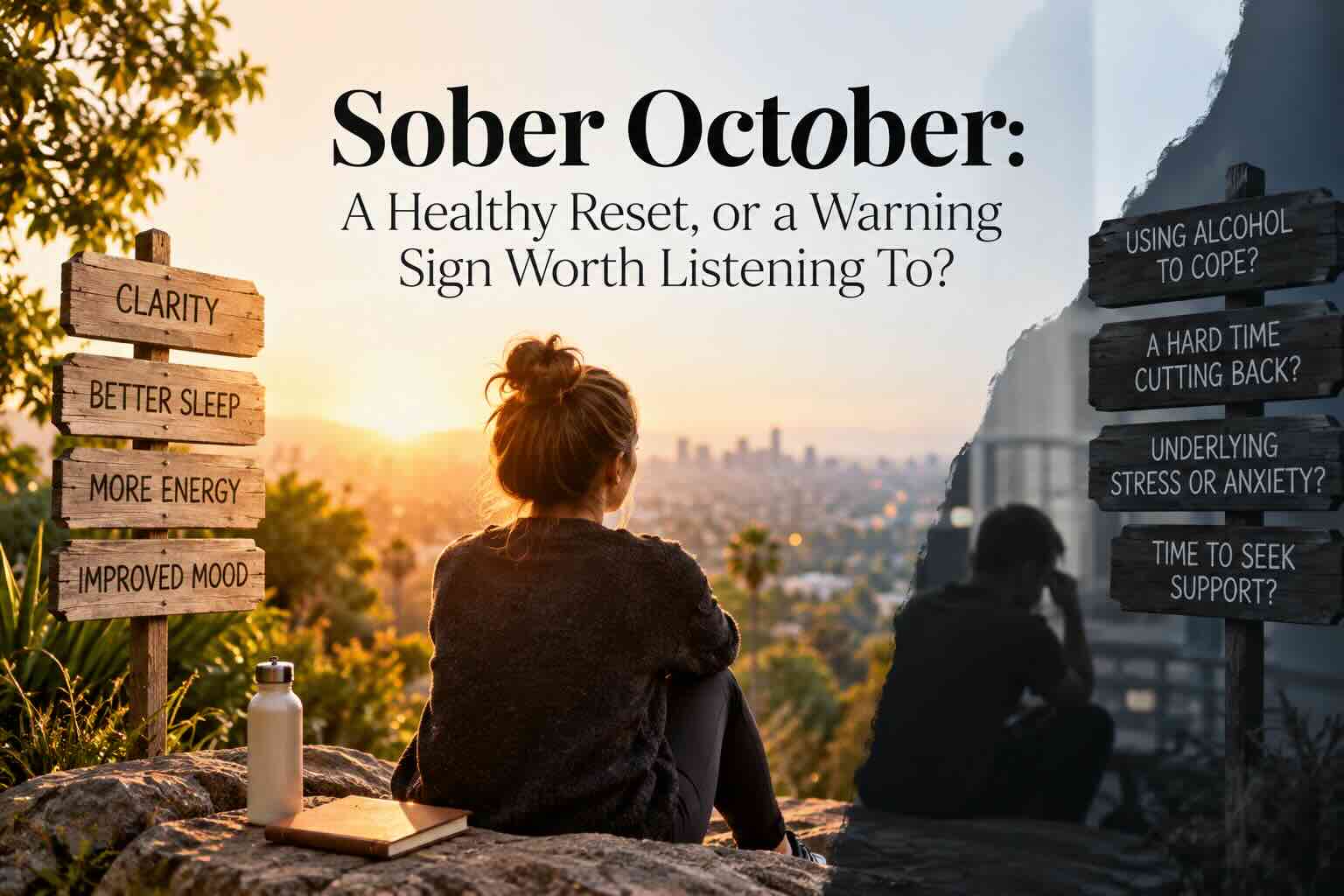
Sober October: A Healthy Reset, or a Warning Sign Worth Listening To?

Maybe you decided to participate in Sober October for the fundraiser. Maybe you signed up to find something out. Either way, Sober October has a way of telling you things.

Thirty-one days without alcohol sounds simple the night before it starts. By the end of the first week, some people feel great, and some people start asking quieter questions.

Whether you're planning ahead, partway through the month, or already slipped, this guide to Sober October 2026 is for you. We'll cover the rules, what taking a break from alcohol can change in your physical and mental health, and what it can mean when the month feels harder than you expected. We'll also cover when stopping needs a doctor first.

Nothing here is a verdict on you. A month without alcohol is a chance to learn something true about your relationship with alcohol, and that's information you can use.

Key takeaways

  • Sober October means 31 days alcohol-free. It began as a UK fundraiser modeled on Australia's Dry July.
  • In one study, a month off alcohol lowered blood pressure and improved insulin resistance in regular drinkers.
  • If the month feels unusually hard, treat that as information about your drinking.
  • If you drink heavily every day, talk with a doctor before stopping. Alcohol withdrawal can be dangerous.


If the month already has you wondering, you can talk with our team whenever you're ready. It's a private conversation.

Releasing the First in a New Series Exploring "Substance Use as an Emotional Response"

The spooks, ghosts, and goblins of Halloween are gone. As the collected assortment of candies starts to dwindle, the air of the season shifts to cooler, longer nights, and the turkey and tinsel of the holidays begin to appear everywhere. This can bring about stress and mental health conditions like seasonal affective disorder. Many people respond to emotional distress in many ways, from food to shopping to drugs or alcohol. 

When someone has experienced trauma or is in a negative situation, how they react to this will be different for everyone. Some people respond in ways that make matters worse for themselves and the parties involved, and some respond unhealthily, like drinking or misusing drugs.

Burning Bridges and Urge Surfing in Recovery

To prevent relapse into addictive behavior, "burning bridges" is a skill that involves radical acceptance, determination, and action. To "burn one's bridges" is to cut off all links with anybody or anything that might trigger a relapse to the addicted drug or behavior. You effectively block that route out of your life by severing the tie that binds you to addictive behavior.